
Transferring Bike Position
Like many avid cyclists, I have a few bikes. I try to keep them set up fitting fairly similar. If I spend a whole summer racing in a certain position, I'm going to want to stay close to that position for cyclocross and winter training.
Making two different bikes feel identical is really hard for me. You'd think it'd be fairly easy, because all you have to do is get your butt and hands in the same place, in relation to the bottom bracket. Last year, I started using Park's road positioning chart (note - if that link dies in the future, you can download the chart here). This is a handy tool for transferring your position from one bike to another.
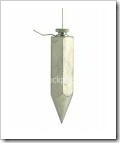 When you make these measurements, make sure the floor you are working on is level. If it's not, rotate the bike 20 degrees or so and try again. A concrete slab (e.g. garage floor or driveway) is never going to be perfectly level in all directions (water drainage), so this is an important tidbit. When the bike is level, you can use a plumb bob to mark the top of your frame, where the bottom bracket center line is. From there, measuring between bikes is much easier and accurate.
A plumb bob, by the way, is a cheap tool you can grab at any hardware or home improvement store. As a bonus, it can be quite sharp, and looks like a sweet ninja weapon. And while you're buying that plumb bob, do yourself a huge favor and get a metric tape measurer. You don't need a big macho 30 footer for bike work, so a 5m tape works perfectly. Centimeters are smaller than inches, which helps keep your measurements more accurate.
One issue worth mention is the difference in position between road and cyclocross bikes. I set my 'cross bike up with a slightly shorter (few mm) seat height, and slightly shorter (1-2 cm) in the reach. On the road, I use my brake lever hoods to stretch out and put power on the pedals. For cyclocross, I like the hoods much higher up, for added control on uncertain terrain.
So the next time you sit on a bike that feels off, you might want to give the road positioning chart a try.
Here are a few measurements I just took from my fixed gear bike, which I value most in getting a bike to feel right:
| Center of Bottom Bracket (BB) to top of Seat: | 84 cm | |
| Tip of seat to center of handlebar: | 66 cm | |
| Drop - top of seat to top of handlebar: | 10 cm | |
| Setback - tip of saddle to BB centerline: | 11 cm |

